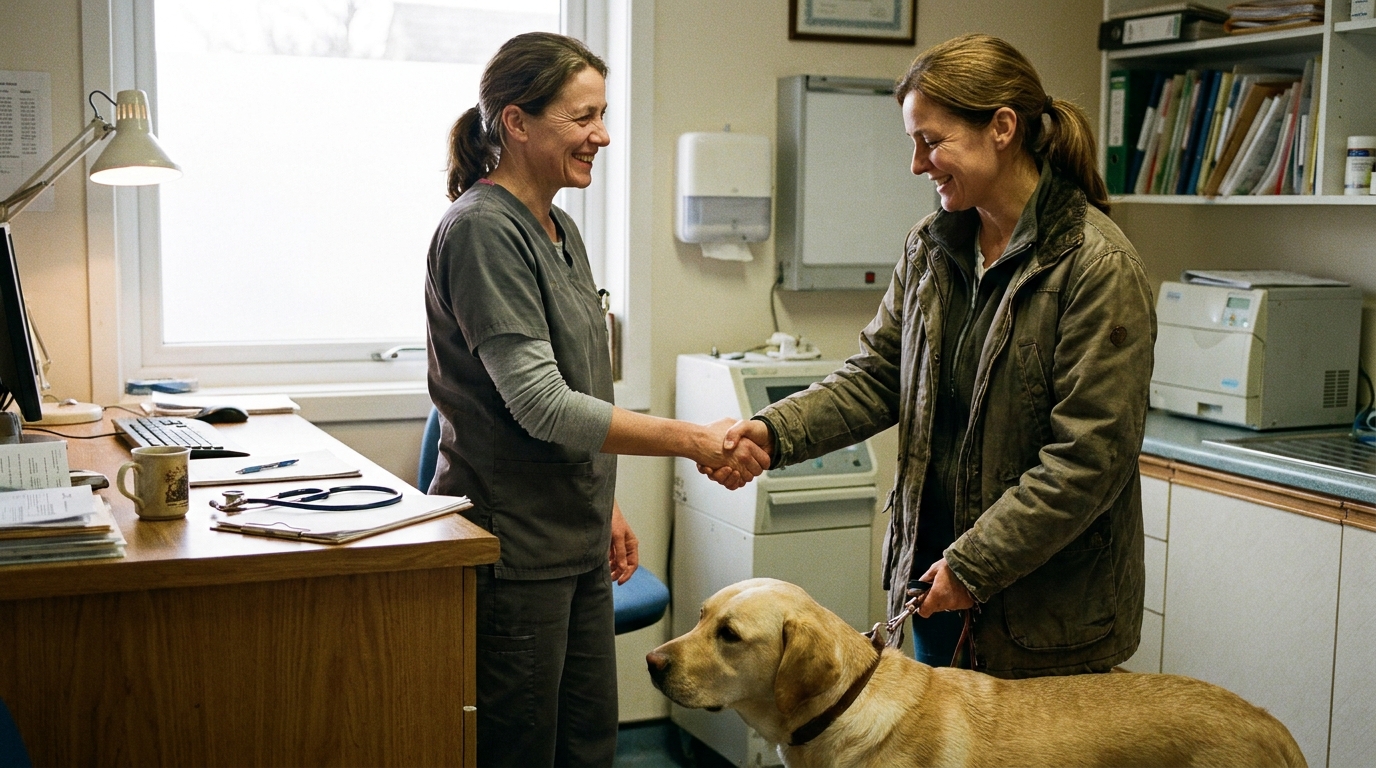
When to ask for a review after a vet consult: the emotional-peak map by visit type
Most clinics that ask for reviews fire the same message the same number of days after every consult. That single default is why the reviews trickle instead of flow. A puppy vaccination, a desexing recovery, and a scary sick-pet visit peak at completely different moments — and there's one consult you should never send a review ask after at all. Match the ask to the visit and the same happy clients — the silent 99% who'd never post on their own — start reviewing you. Miss the moment and they stay quiet.
TL;DR
A review is written from a feeling, and different consults peak at different times. Across the X18 customer base the pattern is clear: routine and vaccination visits peak next-day; surgery and desexing peak at 7–10 days once the pet's bounced back; dental around day 5; a worried sick-pet visit peaks a few days later once the pet's visibly better. And euthanasia and poor-prognosis visits are excluded entirely — never a review ask. Fire one fixed delay at all of them and you catch most at the wrong moment. Match the ask to the visit type and response rates climb.
Why one-size-fits-all timing leaks most of your reviews
Because the strength of a client's feeling — not the quality of the care — decides whether they actually post. A review takes a couple of minutes the client didn't plan to spend; only a real emotional peak overcomes that inertia. The trouble with a fixed "three days after every visit" rule is that it lands on that peak for maybe one visit type and misses it for the rest. Ask a surgery client at three days and the pet's still groggy and the owner's still anxious — wrong moment. Ask a vaccination client at seven days and the mild good feeling has long since evaporated — also wrong.
Get the timing right and you're not extracting reviews, you're catching clients at the moment they'd genuinely be glad to help. That's the whole game with the silent majority — they were happy, they simply needed asking while the feeling was fresh. We laid out that asymmetry in the silent 99%; timing is the lever that turns the feeling into a public review before it fades.
The emotional-peak map by consult type
This is the part you can't scrape from a generic review-software blog — the visit-type timing map tuned from outcome data across veterinary clinics, including the exclusion set that matters most. The principle is one line: ask when the relief or delight has peaked, not a fixed number of days after the door closes. Where that moment sits depends entirely on the consult:
- Vaccinations and routine wellness: next day. A pleasant, low-stakes visit with a healthy pet — the good feeling is real but mild and fades fast, so ask while it's fresh.
- Puppy and kitten first visits: next day. New-pet excitement is a high, warm peak — the owner is thrilled and talkative, one of your best review moments if you catch it early.
- Desexing and routine surgery: 7–10 days. The peak isn't the day of surgery — it's when the owner sees their pet fully bounced back, relieved it all went smoothly.
- Dental procedures: around day 5. Once the pet's eating comfortably and the owner notices the difference, the relief lands.
- Sick-pet / diagnostic visits with a good outcome: a few days after recovery. Fear turning to relief is one of the strongest review emotions there is — but only once the pet is visibly better, not while the owner's still worried.
- Euthanasia, palliative, and poor-prognosis visits: excluded entirely. Never a review ask. This is the line that matters more than any timing tweak.
A generic tool ignores every distinction on that list and sends one delay to everyone — which means it catches the wrong moment for most visit types and, far worse, risks firing a "how did we do?" text at a grieving owner days after they said goodbye. That single mistake can undo years of goodwill.
The reframe: the review ask isn't an event that happens X days after a consult. It's a message that should land at the emotional peak of that specific visit — and for some visits, the right timing is never.
The consults you should never send a review ask after
Start here, because getting this wrong is the only timing error that actively harms the clinic. Euthanasia is the obvious one — a review request to a grieving owner is a wound, not a nudge, and no volume of reviews is worth it. But the exclusion set is wider than that: a poor-prognosis diagnosis, a palliative-care visit, a case that went badly, an owner who left visibly distressed. None of those should ever receive an automated "leave us a review" link, no matter how well your team handled the medicine.
This is exactly where a real engine differs from a blunt SMS blaster — it has to know which consults to exclude, automatically, so a busy front desk never has to remember to suppress a message manually at the worst possible moment. And the clients you don't ask still have a voice: the private feedback route is offered to everyone as universal service recovery, so an owner who was unhappy reaches your team directly — a call, a conversation, a fix — rather than either being ignored or being handed a public-review link. It's the same care logic behind the private resolution flow we describe in replying to reviews in your voice.
Are your review asks landing at the right moment?
Our star-rating calculator shows how many 5-star reviews stand between your current rating and 4.9. Or skip it and we'll map your consult types to their review windows live, and pull your top three local competitors' profiles alongside yours.
Book a 15-minute strategy call →Why the same-day ask usually backfires
There's a temptation to ask while the visit is freshest — same day, before the client forgets you. For most consults that's too early. Same-day, a surgery owner is still anxious about their pet coming round; a sick-pet owner is still waiting to see if the treatment works; even a routine-visit owner is back in the rush of their day and not in a reflective frame of mind. Ask into that and you either get silence or, occasionally, a worried half-review that doesn't reflect how things actually turned out.
The window you want is the overlap between "the outcome is clear and good" and "the feeling is still warm." For a desexing that's around a week later, when the pet's tearing around the lounge again; for a scary diagnostic visit it's a few days after the pet's visibly recovered. Look, we get it — no reception team can hand-track that per patient across a full day-book, which is precisely why it defaults to one blunt delay that's wrong for almost everyone.
How the engine handles timing so your team doesn't
The reason this stays theoretical for most clinics is that doing it by hand is impossible — so it doesn't get done. The engine closes that gap: it recognises the consult type, applies the right window for that visit, and suppresses the asks that should never go out, all without your team scheduling a single message. The nurse who did the desexing doesn't have to remember to text the owner nine days later; the front desk doesn't have to manually flag the euthanasia so no request fires. It just happens correctly in the background.
And the timing isn't guessed — it's weighted by what actually works across similar clinics, then refined on your own response patterns. That cohort-aware tuning is the same intelligence behind the whole platform; it's what separates a review engine from an autoresponder. Pair it with the profile fundamentals in GBP optimisation for vet clinics and the well-timed reviews land on a profile that's already built to rank.
Why the sender matters as much as the timing
Right moment, wrong voice, and the review still doesn't come. A message that reads as an obvious automated blast from a third party gets ignored; a message that reads as if it came from your clinic — the vet or nurse the owner actually saw, the practice they trust — gets a reply. Owners help people they feel a relationship with, not systems. So the ask is written to sound like your clinic, never like X18, which is what makes a client comfortable enough to take the two minutes.
Timing and voice work together: the timing catches the owner at the emotional peak, and the familiar sender makes acting on it feel natural rather than transactional. It's the same principle behind well-run reception review scripts — the ask lands warmest when it feels personal — which we cover in reception scripts for review requests.
What the base shows: matching the ask to the consult type lifts response rates over a single fixed delay, because you're catching owners at their real emotional peak instead of before or after it. The same platform mechanic that produces 6 to 13× more monthly reviews runs hotter when the timing fits the visit — and the exclusion set protects the clinic from the one automated message that can do lasting damage.
What getting the timing right is worth to your clinic
Convert it to bookings and the case is plain. Pet owners choosing a clinic scan the local pack on rating, review count, and how recent the reviews are — and every review you leave on the table through mistimed asks is a missing piece of that proof. Get the windows right across your consult mix and the same patients you already treat build a steady, recent stream of warm reviews — the exact signal that pulls the next searching owner past your competitors and into your diary.
With a loyal client worth years of visits plus the pets they refer, even a modest lift in new-client bookings pays for the programme many times over — and a stronger profile quietly helps hiring too, since vets and nurses check a clinic's reputation before they apply, as we covered in what 600 reviews does to recruitment. Happy to share specifics on a 15-minute strategy call →, and the full vet clinic playbook library covers the supporting tactics.
Frequently asked questions
When should I ask for a review after a vet consult?
It depends on the visit. Vaccinations and routine wellness peak next day; desexing and routine surgery around 7–10 days once the pet's recovered; dental around day 5; a sick-pet visit with a good outcome a few days after the pet's visibly better. The rule is to ask at the emotional peak of that specific consult, not a fixed number of days after every visit.
Which consults should never get a review request?
Euthanasia, palliative and poor-prognosis visits are excluded entirely — a review ask to a grieving owner is harmful. The exclusion set also covers cases that went badly or owners who left distressed. These are suppressed automatically so nothing fires at the worst possible moment.
Why not just ask everyone the same day to keep it simple?
Because same-day is too early for most consults — the surgery owner's still anxious, the sick-pet owner's still waiting on the outcome. You catch a worried half-review or silence. The window you want is when the outcome is clearly good and the feeling is still warm, which sits days later for most visit types.
Do we have to track all this timing manually?
No — and that's the point. Doing it by hand across a full day-book is impossible, so it never gets done. The engine recognises the consult type, applies the right window, and suppresses the asks that should never go out, without your team scheduling a single message.
What happens if a client had a bad experience?
They're offered a private feedback route to your team — universal service recovery, not a filter on who gets asked. Instead of a public-review link, an unhappy owner reaches you directly for a call and a fix, before anything goes public.
Does the sender of the message really matter?
A lot. A message that reads as if from your clinic — the vet or nurse the owner actually saw — gets a reply; an obvious automated blast from a third party gets ignored. Owners help people they have a relationship with, so every ask is written to sound like your practice, never like X18.
Ask every client at the right moment.
Fifteen minutes. We map your consult types to their review windows, pull your current rating and recency against your top three local competitors, and show you where mistimed asks are quietly costing you reviews.
Book a 15-minute strategy call →
Leeor Meirovitz
Leeor's spent the last few years inside hundreds of independent vet clinics across the AU, NZ, UK, US, CA, TH, and PH markets — what actually moves Google ranking, what corporate chains can't replicate at the per-location level, and how the silent 99% of happy clients become the practice's loudest reviewers. He writes the way he talks at strategy calls: friendly, specific, and slightly opinionated.