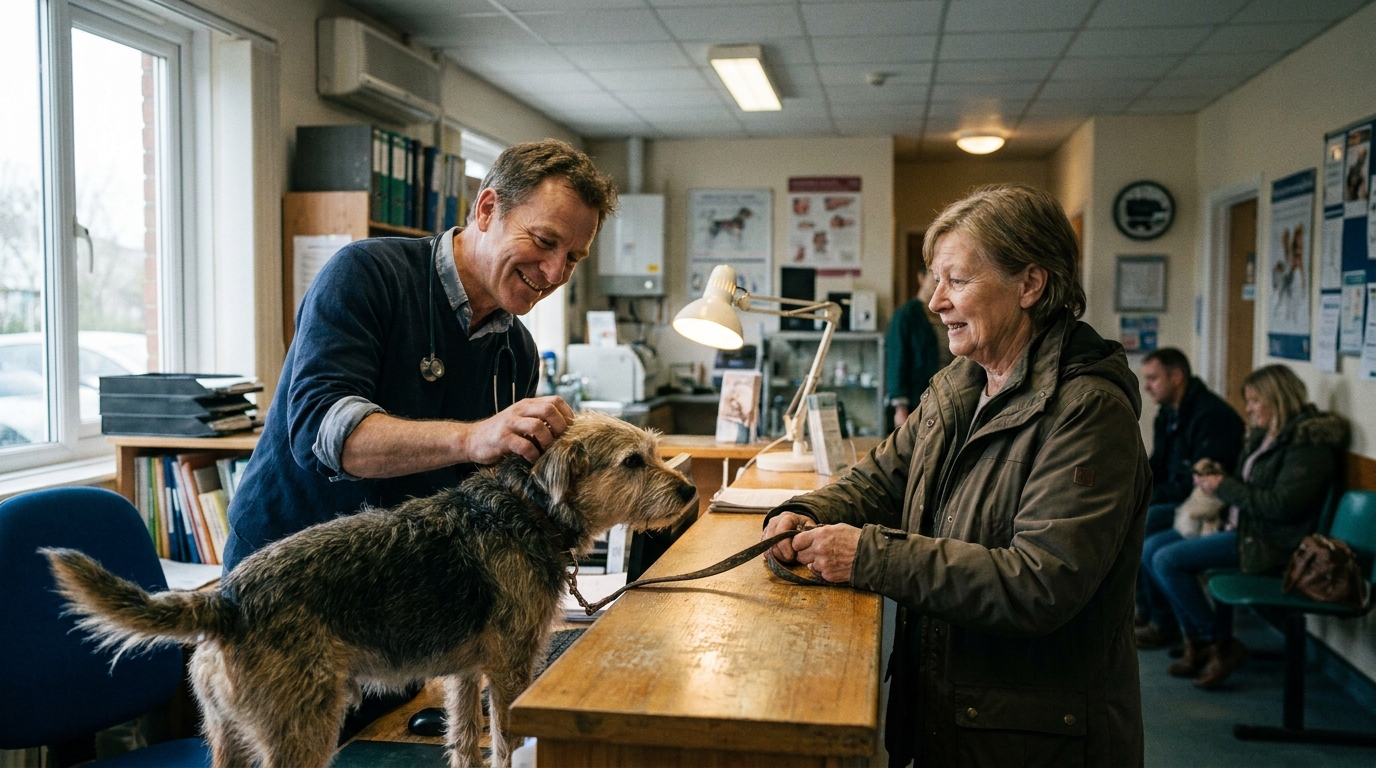
The reactivation play: turning lapsed vet clients into 5-star reviews
Every clinic has a list it never thinks of as a marketing asset: the pet owners who've drifted out of contact — the overdue vaccination, the dog that hasn't been in for eighteen months, the cat whose owner meant to book and never did. Most practices treat that list as lost revenue to chase. It's also the warmest, most under-used source of Google reviews you have — because the client who finally comes back after a long gap arrives relieved, grateful, and primed to say something nice. Ask them at that moment and you don't just recover a client; you recover a reviewer.
TL;DR
Lapsed-client reactivation and review generation are usually run as two separate jobs. Combine them. When an overdue pet owner returns and their pet is sorted, the relief is real — and across the X18 customer base, recall-triggered review asks convert noticeably higher than a standard post-consult ask. The reactivation message brings them back; the well-timed review ask a few days later catches them at the peak of feeling looked-after. Same clients you already have on file, no new marketing spend — just the silent majority finally getting asked.
Why is your recall list a review source, not just a rebooking list?
Think about the emotional state of a returning lapsed client. They've been carrying a low hum of guilt — the vaccination that's overdue, the dental they keep putting off, the nagging sense they've let their pet's care slip. When they finally walk back in and your team is warm about it (no lecture, no judgement) and their pet is looked after, that guilt flips to relief. Relief is one of the strongest emotions there is for prompting a review — stronger than the mild satisfaction of a routine visit that went exactly as expected.
That's the piece most clinics miss. They see the recall list as a revenue-recovery exercise and stop there. But the returning client isn't just a booking — they're a pet owner who just had their relationship with your clinic re-affirmed, at a moment of genuine feeling. That's exactly the client the silent 99% is made of: happy, grateful, and never going to post about it unless you ask. We laid out that asymmetry in the silent 99% — the reactivation moment is one of the clearest windows to break it.
What the customer base actually shows about recall-triggered asks
Here's the part you won't find in a generic review-software listicle, because it comes from watching this play out across the practices X18 runs: recall-triggered review asks convert at a higher rate than standard consult asks. Not marginally — enough that it's worth treating the reactivation cohort as its own review stream rather than folding it into the general flow. The returning-after-a-gap client is measurably more likely to leave a review than the client who comes in every six months like clockwork.
The reason is straightforward once you see it: the routine client's visit is unremarkable — it went fine, as it always does, so there's nothing to move them to write. The reactivated client's visit carries a small arc — worry, return, relief — and that arc is what a review is written from. A review is a feeling committed to text, and the reactivation journey manufactures more feeling than a business-as-usual appointment ever will.
What the base shows: the same platform mechanic that produces 6 to 13× more monthly reviews runs hotter on the reactivation cohort specifically — because you're catching pet owners at a real emotional peak, not mid-routine. And 99% of those happy returning clients would never post on their own; the recall flow is simply the prompt that turns their relief into a public review before it fades.
How do you run reactivation and reviews as one motion?
The mistake is bolting a review ask onto the reactivation appointment as an afterthought — a leaflet at the desk, a "leave us a review" line the receptionist forgets to say. The reactivation and the review are two beats of the same sequence, and the timing between them matters. Here's the shape most practices should run:
- Beat one — the reactivation reach-out: a warm, no-guilt recall message to the overdue client. Framed as care ("we noticed Bella's due for her check — we'd love to see her"), never as a sales chase. This is what gets them back through the door.
- Beat two — the visit itself: the team's job is simply to make the return feel welcomed, not lectured. The client should leave feeling they made a good decision coming back.
- Beat three — the review ask, a few days later: once the pet's sorted and the relief has settled, the ask lands. Not same-day (too soon, the feeling hasn't crystallised) — a few days out, when they're glad they came back.
The gap between beat two and beat three is where the conversion lives, and it's the same principle we map across every visit type in when to ask for a review after a vet consult. Ask at the emotional peak of the return, not the mechanical end of the appointment.
Sitting on a recall list you've never mined for reviews?
Most clinics have hundreds of lapsed clients on file and treat them as lost revenue. On a 15-minute call we'll show you how the reactivation flow doubles as a review engine — and pull your current rating and recency against your top three local competitors so you can see the gap.
Book a 15-minute strategy call →Who on the recall list should you never ask?
The reactivation cohort has its own exclusion set, and getting it right is what separates a considered engine from a blunt SMS blaster. Some clients lapsed for reasons that make a cheerful "welcome back, leave us a review" message land badly — or worse, cause harm. The obvious one: a client whose pet passed away and who never formally closed the file still shows as "overdue." A recall-and-review message to them is a wound. The exclusion logic has to catch that, automatically, so no message fires at the worst possible moment.
The same care applies to a client who lapsed after a complaint or a case that went badly — reactivating them is fine, but they belong in the private feedback route, not the public-review ask. Offering everyone a private channel to reach the team directly is universal service recovery, not a filter on who's "allowed" to review; it means an unhappy returning client reaches you for a conversation and a fix rather than either being ignored or handed a review link they'll use to vent. That's the same logic behind the private resolution flow we describe in replying to reviews in your voice.
The reframe: your recall list isn't a pile of lost revenue to chase — it's a pre-qualified list of clients who already trust you, arriving at a moment of relief. Reactivation recovers the booking. The review ask, timed to the relief, recovers the reviewer.
Why doesn't the front desk just do this by hand?
Because it's genuinely impossible at any real day-book volume. Running reactivation and reviews as one motion means: identifying who's overdue, sending a no-guilt recall, tracking who actually returns, waiting the right number of days, suppressing the clients who should never be asked, and then firing a review request that reads as if it came from your clinic — per returning client, every day, without dropping a single one. No reception team can carry that. So it doesn't get done, and the recall list stays a dormant asset.
That's the gap the engine closes. It works off your existing appointment and client data, recognises the reactivation event, applies the right delay, honours the exclusion set, and sends an ask written in your clinic's voice — never as an obvious third-party blast. The nurse doesn't have to remember; the front desk doesn't have to flag anyone. It runs in the background, and the reviews arrive. Pair it with the profile fundamentals in GBP optimisation for vet clinics and those recovered reviews land on a profile already built to rank.
What's a reactivated reviewer actually worth?
Run the two payoffs together and the case gets hard to argue with. The reactivation itself brings back a client worth years of visits plus the pets they refer — that alone usually covers the programme. But the review is a second, compounding return: a steady stream of recent 5-star reviews is exactly the signal a searching pet owner scans in the local pack before they choose. Every recovered reviewer strengthens the proof that pulls the next new client past your competitors and into your diary.
It's the quiet version of what long-established practices see when they finally turn the volume on — the same pattern we documented in what thirty years of practice looks like once the reviews start flowing. And a stronger, more active profile helps on the hiring side too, since vets and nurses check a clinic's reputation before they apply, as we covered in what 600 reviews does to recruitment. Happy to share specifics on a 15-minute strategy call →, and the full vet clinic playbook library covers the supporting tactics.
Frequently asked questions
How do I reactivate lapsed vet clients without sounding pushy?
Frame it as care, not a sales chase. A message that reads "we noticed Bella's overdue for her check and we'd love to see her" lands warm; "book now, spots filling" lands cold. The returning client should feel welcomed back, not sold to — that warmth is also what makes them receptive to a review ask a few days later.
Why do recall-triggered review asks convert better than normal ones?
A returning lapsed client arrives carrying a small emotional arc — worry, return, relief — and a review is written from feeling. The routine six-monthly client has no such arc; the visit went fine as always, so there's nothing to move them to write. Across the customer base, the reactivation cohort reviews at a higher rate for exactly this reason.
When should the review ask go out after a reactivation visit?
A few days after the visit, not same-day. Same-day is too soon — the relief hasn't settled and the client's back in the rush of their day. A few days out, once the pet's sorted and they're glad they came back, is when the ask catches the peak.
Which lapsed clients should never get a review request?
Any client whose pet has passed away but whose file still reads as "overdue," and anyone who lapsed after a complaint or a case that went badly. The first must be suppressed automatically so no cheerful message fires at a painful moment; the second belongs in the private feedback route, not the public-review ask.
Can't my reception team just run this manually?
Not at real volume. It means tracking who's overdue, who actually returned, the right delay per client, the exclusion set, and a voice-matched ask — per returning client, every day. That's why it never gets done by hand. The engine runs it off your existing client data in the background.
Does the reactivation message need to come from the clinic, not X18?
Yes. Both the recall and the review ask are written to read as if they came from your practice — the team the owner knows and trusts. Pet owners respond to people they have a relationship with, not to an obvious automated blast from a third party, so the messages never present as X18.
Turn your recall list into recovered reviewers.
Fifteen minutes. We'll show you how the reactivation flow doubles as a review engine, pull your current rating and recency against your top three local competitors, and map where your dormant client list is quietly costing you reviews.
Book a 15-minute strategy call →
Leeor Meirovitz
Leeor's spent the last few years inside hundreds of independent vet clinics across the AU, NZ, UK, US, CA, TH, and PH markets — what actually moves Google ranking, what corporate chains can't replicate at the per-location level, and how the silent 99% of happy clients become the practice's loudest reviewers. He writes the way he talks at strategy calls: friendly, specific, and slightly opinionated.