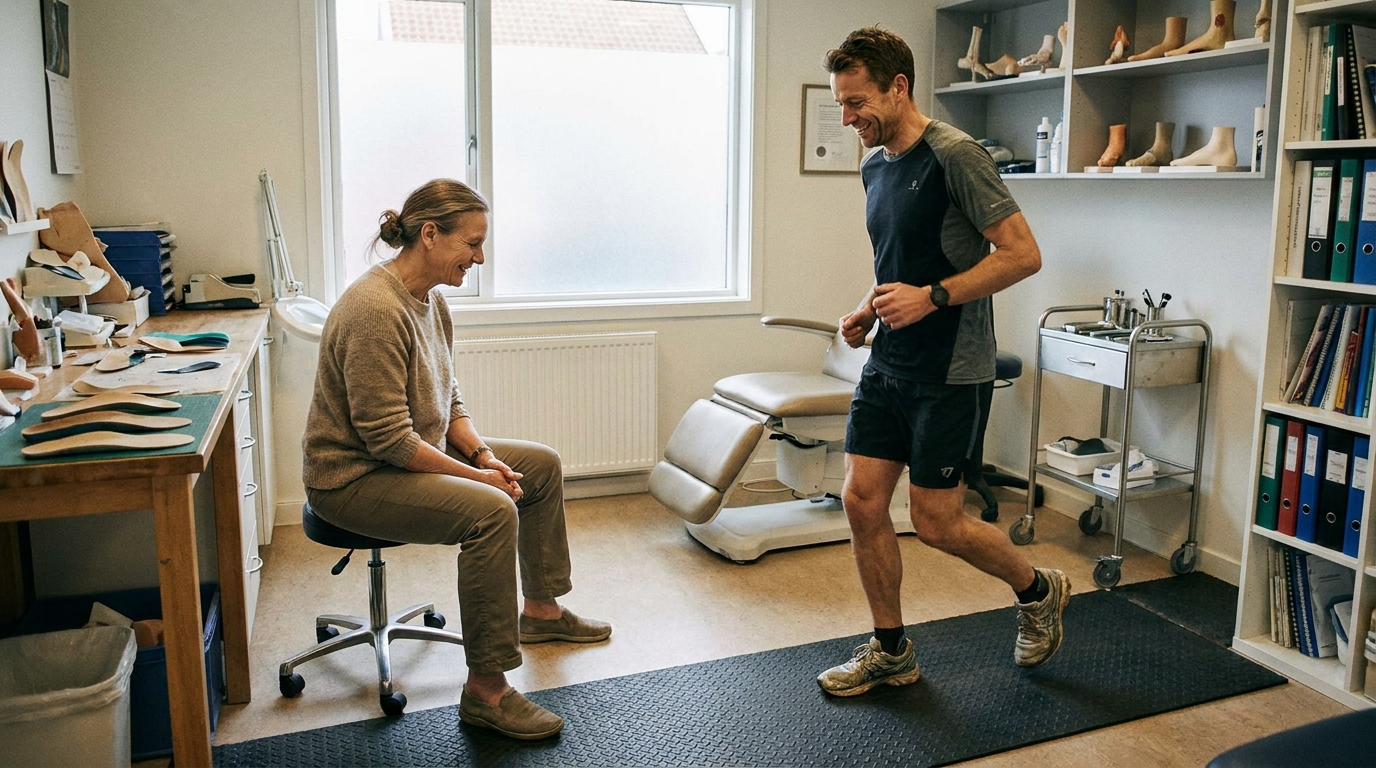
Sports podiatry and the return-to-training review moment
A sports-injury patient doesn't measure your work by the appointment. They measure it by one thing: being back to training. The runner with the stubborn heel, the netballer with the recurring ankle, the weekend cyclist whose knee finally settled — the moment that matters to them isn't the day you assessed their gait or handed over the orthotic. It's the first pain-free run, the return to full sessions, the race they didn't have to pull out of. That moment is the single best review trigger a podiatry clinic has — and most clinics ask three days after the last appointment and miss it completely.
TL;DR
The sports-podiatry patient defines success as measurable return-to-activity, not the end of treatment — so the review moment sits weeks after the last appointment, at the first pain-free run or full session. Across the X18 customer base, sports-cohort reviews are the highest-quality reviews on a podiatry profile: they're specific, outcome-driven, and read as proof. Ask at the wrong time (three days after the final visit) and you catch the patient before they've earned the win. Time the ask to the return-to-training moment and you get your most persuasive reviews.
Why is the sports patient's review moment weeks after the last appointment?
Because the outcome they care about hasn't happened yet when they walk out of your clinic. A sports podiatry episode — gait assessment, orthotic, load management, a rehab plan — doesn't deliver its payoff at the final appointment. The payoff is downstream: it's the moment the patient tests the foot under real load and it holds. The first 10k with no heel pain. The first full training week back. The game they finished. Until that happens, the patient doesn't actually know yet whether it worked — and a review is written from knowing it worked.
This is what makes sports podiatry different from a lot of allied-health timing. For many appointment types the emotional peak is close to the visit — relief, comfort, a problem sorted. For the sports patient the peak is deferred and earned: it arrives when they prove to themselves they're back. Ask before that and you're asking someone who's cautiously optimistic but not yet convinced. Ask at the return-to-training moment and you're asking someone who just had their comeback confirmed.
Why sports-cohort reviews are the best ones on your profile
Here's the part you won't find in a generic review-software listicle, because it comes from watching podiatry profiles across the X18 customer base: sports-cohort reviews are consistently the highest-quality reviews a podiatry clinic collects. Not just more numerous when timed right — better. And "better" here has a specific, useful meaning for how you rank and convert:
- They're specific. A sports patient names the outcome — "back running after six months of heel pain," "finished the half marathon." Specific reviews read as real and persuade harder than a generic "great service."
- They're outcome-driven. The review describes a measurable result, which is exactly the proof the next searching patient is looking for when they've got the same injury.
- They carry keywords naturally. Patients write "plantar fasciitis," "shin splints," "running injury" into the review themselves — the language other patients search — without you ever prompting for it.
- They're emotionally strong. Getting an athlete back to their sport is a genuine win for them, and that carries into how the review reads.
A profile with a run of specific, outcome-driven sports reviews doesn't just have a higher star rating — it has more convincing reviews, the kind that turn a searcher with the same injury into a booking. That's a quality you can't buy or fake; you can only earn it by catching these patients at the right moment.
What the base shows: the same platform mechanic that produces 6 to 13× more monthly reviews yields the clinic's most persuasive reviews when it catches the sports cohort at return-to-training. And 99% of those athletes would never post on their own — they got back to sport, moved on, and never thought to. The prompt, timed to the win, is the whole difference.
How do you time the ask to return-to-training?
The mechanical answer — "ask X days after the last appointment" — is exactly what fails here, because the last appointment and the return-to-training moment can be weeks apart and the gap varies by injury. A settling orthotic for a runner might reach its test moment at four to six weeks; a straightforward overload injury with a clear rehab plan, sooner. The point is that the ask has to be anchored to the expected return-to-activity window for that patient's episode, not to when they last sat in your chair.
- Anchor to the outcome, not the appointment. The trigger is the estimated point the patient is back to full training, which follows from the injury and the plan — not a fixed post-visit delay.
- Give the win time to happen. Asking while they're still in the cautious phase gets a tentative review or none; asking after they've logged a few clean sessions gets the confident one.
- Let the message reference the comeback. An ask that acknowledges they're back to what they love reads as care from the clinic, not an automated blast — and gets a reply.
This is the same cohort-timing principle we map across the whole patient mix in the podiatry review-timing guide — each cohort has its own moment, and the sports cohort's is the most deferred and the most worth waiting for.
Getting your best patient wins onto your profile?
Your sports patients hand you your most persuasive reviews — if you ask at the right moment. On a 15-minute call we'll map your cohorts to their review windows and pull your current rating and recency against your top three local competitors.
Book a 15-minute strategy call →What about the sports patient whose comeback didn't go to plan?
Not every episode ends in a clean return, and the timing logic has to account for that. A patient still struggling at the point you'd normally expect them back to training shouldn't get a cheerful "how's the running going?" review ask — for them it lands as a reminder they're not better. That patient belongs in the follow-up-care conversation, and if there's dissatisfaction, in the private feedback route where your team can pick it up directly.
Offering everyone a private channel to reach the clinic is universal service recovery, not a filter on who's allowed to review — it means the patient whose recovery stalled reaches you for another look or a plan adjustment, rather than either being ignored or being nudged toward a public review while they're frustrated. It's the same care logic that sits behind knowing which cohorts to hold back from the public ask entirely, which we cover in who not to ask for a review in podiatry.
The reframe: for a sports patient, the review moment isn't the end of treatment — it's the return to sport. Anchor the ask to when they're back doing what they love, and you collect the most convincing reviews on your profile. Anchor it to the last appointment, and you ask before they've earned the win.
Why can't the front desk just track this manually?
Because it means estimating a return-to-training window per patient, per injury, holding the ask until then, suppressing the patients whose recovery stalled, and sending a message that references their comeback in the clinic's voice — across a full book, without dropping anyone. No reception team can carry that, so it defaults to a fixed post-visit delay that catches sports patients weeks too early. The best reviews your clinic could collect never get asked for.
That's the gap the engine closes. It works off your appointment and episode data, anchors the ask to the expected return-to-activity window rather than the last visit, honours the hold-back logic for patients still struggling, and sends the request as if from your clinic — never an obvious third-party blast. The timing isn't guessed either; it's weighted by what works across similar clinics and refined on your own patients' patterns. Any allied-health booking system with automated reminders can feed it, so there's no workflow change — the cohort data already lives in systems like Cliniko and the engine reads it.
What is the sports cohort worth to your clinic?
Two ways it pays. First, sports patients are high-value and high-referral — active people with training partners, clubs, and running groups who ask each other "who fixed your foot?" A specific, outcome-driven review is the answer that circulates. Second, those reviews are the ones that convert the next searcher: someone Googling "podiatrist plantar fasciitis" and reading a review that names exactly their injury and a clean recovery is most of the way to booking before they've called.
That's the compounding value — the sports cohort feeds the new-patient engine harder than any other, which is why it's a pillar of the wider cohort strategy we set out in the podiatry new-patient engine, and why the pattern shows up so clearly in a regional NSW clinic's results. Happy to share specifics on a 15-minute strategy call →, and the full podiatry playbook library covers the supporting tactics.
Frequently asked questions
When should a sports podiatry clinic ask for a review?
At the return-to-training moment, not a few days after the last appointment. The sports patient measures success by being back to full activity, which can be weeks after their final visit. Anchor the ask to the expected return-to-activity window for that injury and plan, once they've logged a few clean sessions — that's when the win is confirmed and the review is confident.
Why are sports-injury reviews better than other reviews?
They're specific, outcome-driven, and carry the patient's own injury language — "back running after plantar fasciitis," "finished the half marathon." That specificity persuades the next searcher with the same injury far harder than a generic "great service," and the injury keywords the patient writes are exactly what others search.
What if I ask too soon after treatment?
You catch the patient before they've tested the foot under real load, when they're cautiously optimistic but not yet convinced it worked. You get a tentative review or silence. The whole value of the sports cohort comes from waiting for the return-to-training win before asking.
Should I ask a patient whose recovery didn't go well?
No. A patient still struggling at the point you'd expect them back shouldn't get a cheerful review ask — it lands as a reminder they're not better. They belong in the follow-up-care conversation, and if there's dissatisfaction, in the private feedback route where your team can pick it up and adjust the plan.
How does the clinic track return-to-training windows across every patient?
It can't by hand — estimating a window per patient and per injury across a full book is impossible, which is why it defaults to a fixed delay that fires too early. The engine anchors the ask to the expected return-to-activity window from your episode data, holds back patients still struggling, and sends the message automatically.
Does this work with our podiatry booking software?
Any allied-health booking system with automated reminders can feed the timing engine — Cliniko, Halaxy and similar. The appointment and cohort data that drives the windows already lives in your system; the engine reads it and routes each patient to the right ask, with no workflow change for your team.
Collect your patients' comeback stories.
Fifteen minutes. We map your cohorts to their review windows, pull your current rating and recency against your top three local competitors, and show you where your best patient wins are going uncaptured.
Book a 15-minute strategy call →
Leeor Meirovitz
Leeor's spent the last few years inside hundreds of independent vet clinics across the AU, NZ, UK, US, CA, TH, and PH markets — what actually moves Google ranking, what corporate chains can't replicate at the per-location level, and how the silent 99% of happy clients become the practice's loudest reviewers. He writes the way he talks at strategy calls: friendly, specific, and slightly opinionated.